
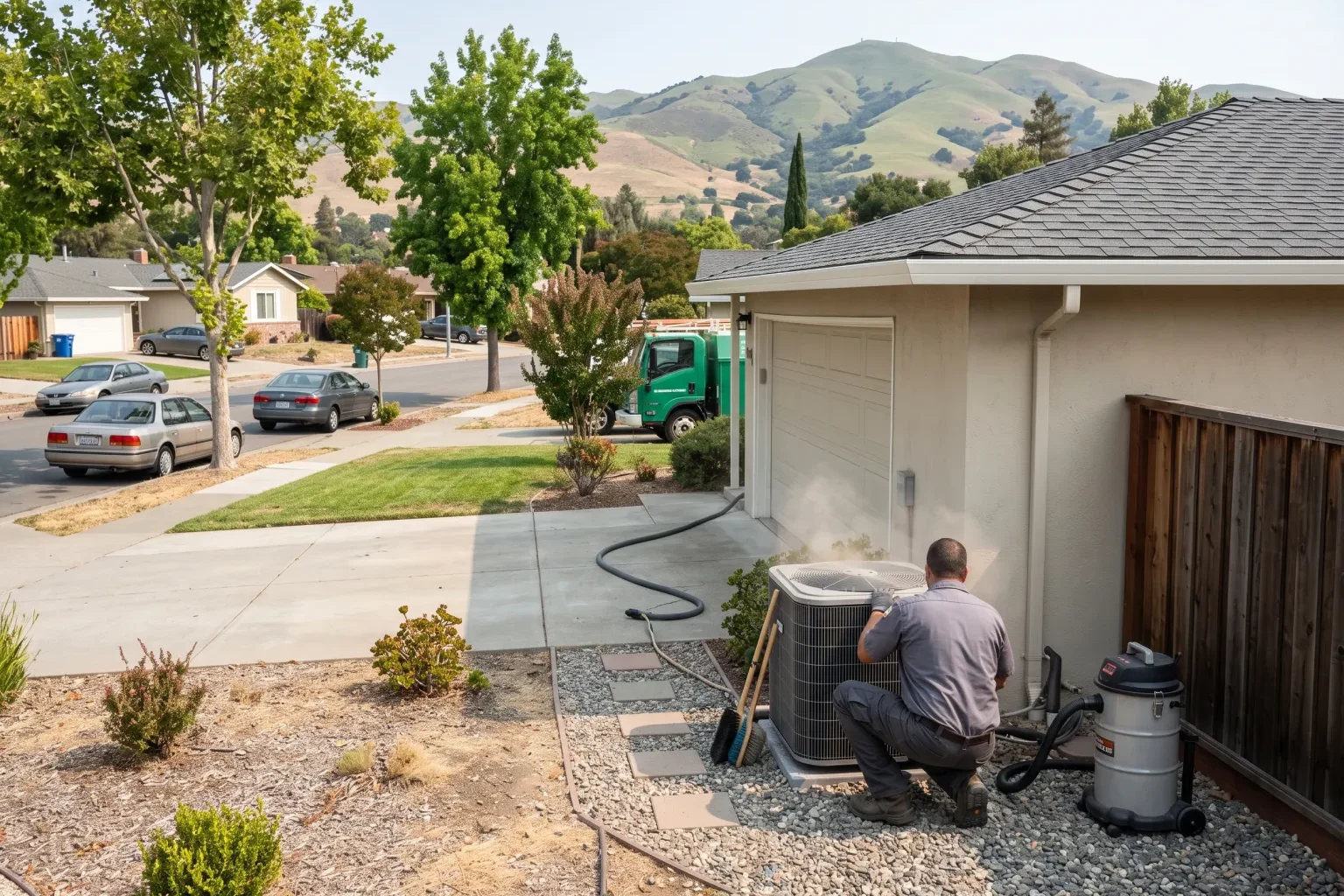
The short answer
Duct cleaning is worth it when there's a clear reason, such as visible dust or debris at the vents, a recent remodel, pests, or moisture and mold. If ducts are torn, crushed, or badly leaking, repair or replacement may matter more than cleaning. A PrimeAir technician can inspect your system and tell you which one fits your home.
Your ductwork carries every bit of heated and cooled air through your home, but it's easy to forget because it's hidden in the attic, crawlspace, or walls. Over time, ducts can collect dust, debris, pet hair, construction leftovers, and sometimes moisture or pests. Cleaning isn't something every home needs on a fixed schedule. It makes sense when there's a specific reason, like visible buildup, a recent remodel, or signs of contamination. PrimeAir HVAC Repair Service helps homeowners in Fremont, Newark, Union City, Milpitas, and surrounding cities figure out whether their ducts actually need cleaning, repair, or replacement, then handles the work.
Signs Your Ducts May Need Cleaning
Most homes don't need duct cleaning every year. Still, some situations point to ductwork that's dirtier than it should be. In Fremont and the surrounding area, dry summers can push fine dust into homes, and mild, damp winters can create conditions where moisture lingers in poorly sealed ducts in attics and crawlspaces. Watch for these signs:
- Dust or debris blowing out of supply vents when the system starts
- Visible buildup on vent covers or return grilles that comes back soon after you wipe it off
- A musty or stale smell when the heat or air conditioning runs
- Evidence of rodents or insects in or near the ductwork
- Recent remodeling, drywall work, or sanding without the ducts sealed off
- Visible mold growth inside ducts or on other HVAC parts
- Filters that clog much faster than they used to
What We Check During an Inspection
Before recommending cleaning, we look at the whole air distribution system. Dirty ducts are sometimes a symptom of another problem, like leaks pulling in attic dust or a filter that doesn't fit right. Cleaning without fixing the cause usually means the buildup comes back.
Here's what a technician typically reviews:
- Supply and return ducts, using a camera where access is limited
- Duct connections, joints, and seams for gaps or separation
- Insulation on ducts running through attics, garages, and crawlspaces
- The return plenum, supply plenum, and blower area for dirt buildup
- Filter size, fit, and condition
- Signs of moisture, condensation, or mold
- Vent registers and grilles for damage or blockage
- Crushed, kinked, or sagging flexible duct runs that restrict airflow
Cleaning, Repair, or Replacement: Your Options
After the inspection, we explain what we found and what we'd suggest. We don't push cleaning when it won't help.
Cleaning is the right choice when the ducts are in good physical shape but have collected dust, debris, or contaminants. We use specialized equipment to loosen buildup and pull it out under negative pressure, so the dirt is captured instead of spread around your home. We also clean registers, grilles, and accessible system components so clean ducts aren't recontaminated right away.
Repair makes sense when problems are limited to certain spots. That can mean resealing leaky joints, reconnecting a duct that's come apart, replacing a short damaged section, adding or fixing insulation, or straightening flexible ducts that are pinched or crushed. Sealing leaks often helps keep dust from coming back in the first place.
Replacement is worth considering when ductwork is old, brittle, widely damaged, badly undersized, or contaminated in a way that cleaning can't fix, such as extensive mold in flexible duct lining or heavy pest damage. If you're also planning to replace your heating or cooling equipment, it can be a good time to evaluate whether your existing ducts are the right size and layout for the new system.
What Affects the Cost of Duct Work
Every home is different, so we give you a clear quote after seeing the system. The main factors include:
- The size of your home and the number of supply and return vents
- How easy it is to reach the ducts, such as tight attics or low crawlspaces
- The type of ductwork, like rigid metal, duct board, or flexible duct
- How much buildup or contamination is present
- Whether there's mold, pest debris, or moisture that needs extra steps
- Any repairs, sealing, or insulation work needed alongside cleaning
- Whether sections, or the whole system, need to be replaced
- Cleaning of other parts, such as the blower or coil, if needed
How a Duct Cleaning Visit Works
We try to keep the process simple and predictable. When you contact us, we'll ask a few questions about your home and what you've noticed so the technician arrives prepared.
On the visit, the technician inspects the system and walks you through what they find, including photos or camera footage when that helps. You'll get a clear recommendation and quote before any work begins. If you approve cleaning, we protect floors and the area around vents, connect our equipment, and work through the system one section at a time. Registers and grilles are cleaned, and we'll replace or recommend the right filter when we're done.
If repairs are part of the plan, we can often handle sealing and minor fixes during the same visit. Larger repairs or replacement are scheduled separately. Before we leave, we'll test airflow, show you the results, and share tips to help keep the ducts cleaner, like checking filters on a regular schedule. If you have an HVAC failure that can't wait, PrimeAir offers 24/7 emergency service.